February 14, 2025Field Safety Leadership
Purpose-Built Spaces, Thoughtfully SituatedI help faculty, staff, students, and institutions strengthen how they plan, conduct, and learn from field activities. My workshops connect risk assessment and emergency preparation with communication, human factors, and physical and psychological safety.
❋ Who the workshop is forFaculty, staff, students, administrators, and risk managers involved in field teaching or research across disciplines, including higher education and K–12 programs. The workshop welcomes participants with varied levels of field experience.
❋ What participants work on Assessing hazards and developing site safety summaries for their own activities.
Preparing participants and communicating expectations, responsibilities, and ways to raise concerns.
Developing standard operating procedures and emergency response plans suited to their programs.
Addressing physical and psychological risks, including anxiety, exclusion, and barriers to participation.
Using incident reports, near misses, and participant feedback to identify improvements.
Participants begin applying these ideas to their own programs and identify priorities for further work, including needs for equipment, training, and institutional support.
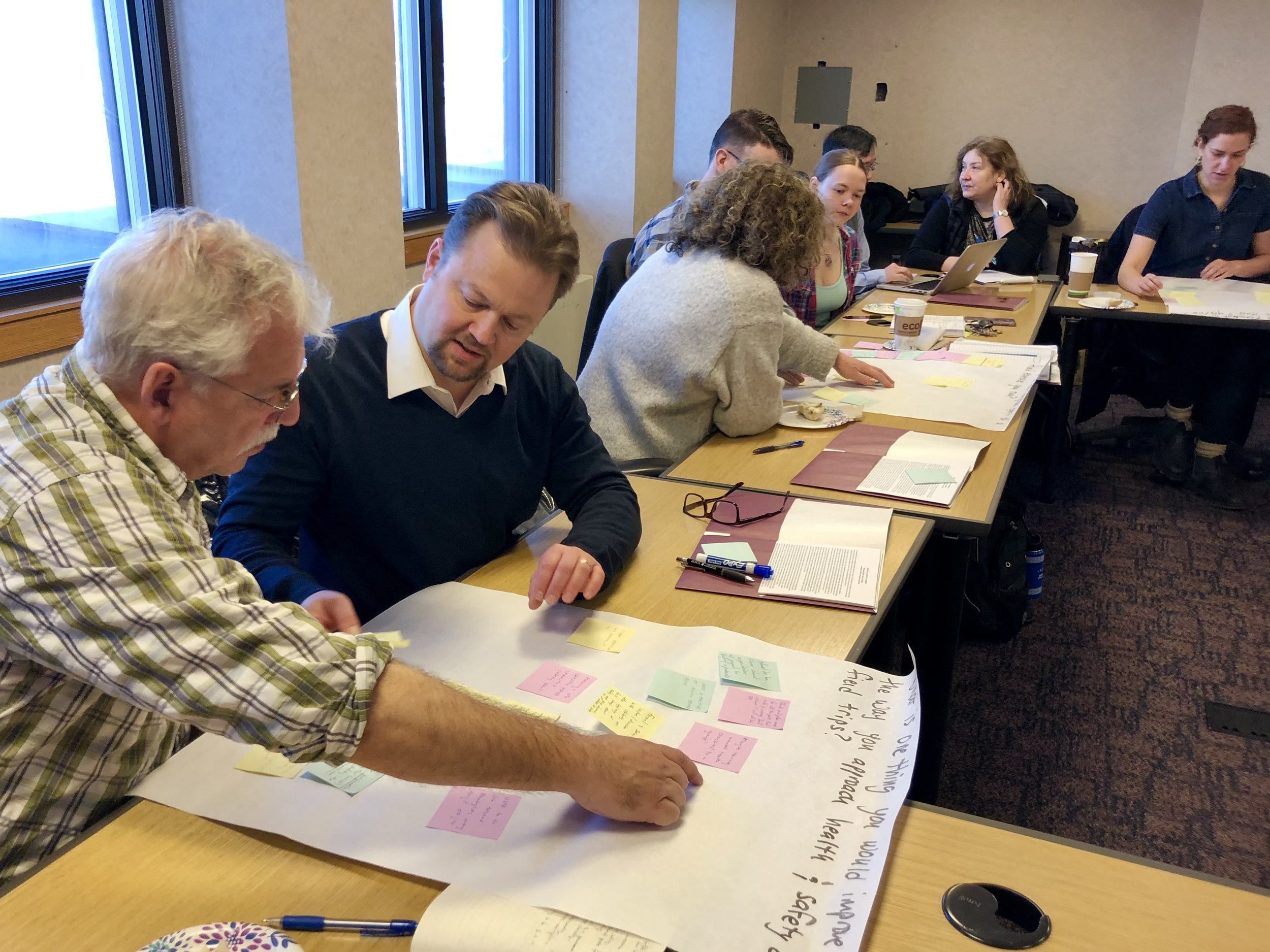
❋ How we workTypically offered over one to one-and-a-half days, the workshop combines scenarios, small-group discussion, gallery walks, and practical exercises. We examine how individual decisions, working conditions, supervision, and institutional practices shape safety. The schedule allows time for questions and the concerns most relevant to the group.
❋ Host a workshopI encourage hosts to involve colleagues from several departments. Their different field experiences enrich the discussion and help establish shared expectations across campus.
To begin planning, send a few possible dates, your goals, and an estimate of attendance. An ideal room has a projector, tables for small-group work, and wall space for shared activities.
My primary request is assistance with travel expenses. An honorarium of about $1,500 is appreciated for a one- to one-and-a-half-day workshop. I am happy to discuss a reduced or waived honorarium when funding is limited, particularly when it would otherwise draw on resources needed for students or instruction. Travel support is arranged separately.


This itinerary embodies our expertise, aligning each session with measurable outcomes that optimize engagement, facilitate collaboration, and sustain momentum for continuous improvement.
Day OneOrientation and Goal Setting
We establish shared objectives, outline solutions, and set performance metrics that frame the comprehensive experience ahead.
Check-In9:00 – 9:30am
Group Activity11:00am
Lunch Break12:30pm
Creative Workshop2:00pm
Dinner6:30pm

Day TwoCore Skills Workshop
We implement interactive modules that demonstrate essential techniques, optimize retention, and embed practical competences through guided practice.
Check-In9:00 – 9:30am
Group Activity11:00am
Lunch Break12:30pm
Creative Workshop2:00pm
Dinner6:30pm

Day TwoCore Skills Workshop
Industry leaders present emerging trends, facilitating critical discourse on future challenges and collaborative opportunities.
Check-In9:00 – 9:30am
Group Activity11:00am
Lunch Break12:30pm
Creative Workshop2:00pm
Dinner6:30pm
Our methodology unites scientific instructional design with operational precision, delivering measurable return on participation.-
Pre-event diagnostics determine baseline competencies, aligning content with identified gaps.
-
Module sequencing flexes to varying time horizons and sector requirements.
-
Internal audits examine pedagogical coherence and logistical efficiency.
-
Single-sign-on access streamlines user experience across devices.
-
Multimodal content accommodates visual, auditory, and kinesthetic preferences.